Home · The Ordane Journal · Before you pay · Forex Prop Firms: How They Work & Risks
Forex Prop Firms: How They Work & Risks
A forex prop firm is a company that provides simulated trading capital to users who pass an evaluation challenge. Instead of depositing personal funds to trade live markets, users pay a one-time fee to access a simulated environment and earn a profit split based on their simulated performance.
Ordane accounts operate on simulated capital. No live funds are traded and no deposits are accepted. Ordane sells one product, the Ordane Instant Account: direct access, no evaluation phase and no challenge, on simulated capital.
<a id="quote"></a>
What Is a Forex Prop Firm and Do You Pay to Trade?
The global currency market moves immense volume. Trading in foreign exchange markets reached $7.5 trillion per day in April 2022 (Bank for International Settlements, retrieved 2026-09-12). Retail brokers require users to deposit their own funds to participate in this market.
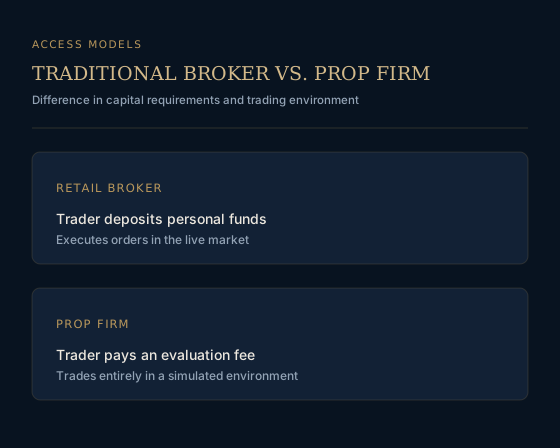
A forex prop firm uses a different model. Instead of depositing funds to trade, users pay a fee to enter an evaluation challenge. The firm provides a simulated environment. Traders must hit specific targets without breaching loss limits to proceed.
Most of the industry relies on evaluation fees. If a trader fails the challenge, the fee is lost. This business model shifts the financial burden entirely to the initial purchase rather than a trading margin requirement. Traders must read the terms carefully.
What Are the Hidden Rules in Forex Prop Firm Evaluations?
Understanding the restrictions inside a simulated environment is critical. Companies design evaluations to test discipline. A single mistake can terminate the account.
Consistency Rules and Loss Limits
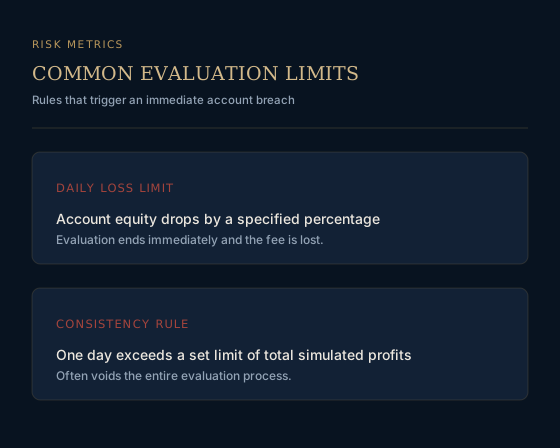
Prop firms enforce strict parameters during the evaluation phase. The most common metric is the daily loss limit. If an account equity drops by a specified percentage in a single day, the evaluation ends immediately. The user loses the upfront fee.
Firms also apply consistency rules to prevent users from passing a challenge with one large trade. These rules dictate that no single trading day can account for more than a set limit of the total simulated profits. Breaking this rule often voids the entire evaluation process.
News Trading Restrictions
Economic data releases cause severe market volatility. Many firms strictly prohibit opening or closing positions during high-impact news events. This restriction adds a layer of complexity for the user.
If a trader executes an order just minutes before a major announcement, the firm may flag the account for a violation. Some companies simply confiscate any simulated profits generated during these restricted windows. Users must monitor the economic calendar constantly to avoid unexpected breaches.
Are Forex Prop Firms Regulated by the CFTC?
Regulatory oversight remains a primary concern for market participants. Because these companies offer a simulated environment rather than acting as a traditional broker for live client funds, they bypass the requirement to register as dealers.
This structural difference means the customer does not receive the same regulatory protections associated with a registered retail broker. If a prop firm ceases operations unexpectedly, users have limited recourse to recover their initial evaluation fees or any unpaid simulated payouts.
The absence of direct oversight allows firms to set their own arbitrary terms for challenge completions and rule violations. Users must review the legal agreements and evaluate the public credibility of the company before paying any upfront fee.
How Do Profit Splits and Scaling Plans Work?
Traders who pass the evaluation phase receive access to a simulated account with a profit split agreement. The firm pays the user a percentage of the simulated profits generated in the environment.
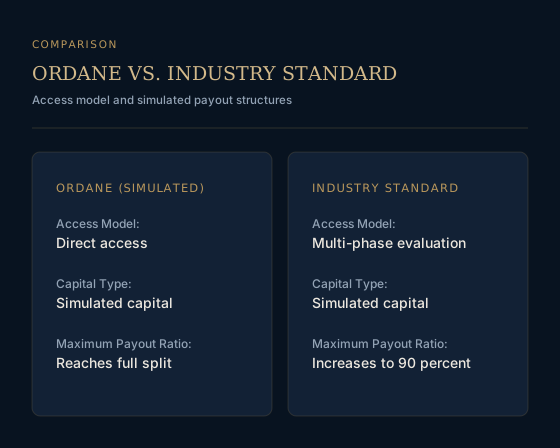
Many firms implement a scaling plan to incentivize consistent performance. FTMO (prop firm) offers a Scaling Plan where the maximum payout ratio for funded traders increases to 90% (FTMO, retrieved 2026-09-12). These scaling models often require the user to achieve specific milestones over several months.
The payout is always a reward for simulated performance, not a withdrawal of live market profits. The company uses its own fee revenue to process these payments.
<a id="table"></a>
| Metric/Feature | Ordane (Simulated) | Industry Standard |
|---|---|---|
| Access Model | Direct access, no evaluation phase | Multi-phase evaluation challenge |
| Capital Type | Simulated capital | Simulated capital |
| Maximum Payout Ratio | Reaches full split over time | Increases to 90 percent |
Traders must verify the exact conditions required to request a payout. Some companies mandate a minimum number of trading days or restrict withdrawals to specific calendar dates. The terms dictate when and how the simulated profit split is honored.
What Checklist Should Traders Use to Evaluate Prop Firms?
Traders should use a strict checklist to evaluate a prop firm before paying the evaluation fee. This objective criteria helps identify transparent companies.
- Rule versioning: Confirm that the rulebook is versioned and changes are not applied retroactively.
- Payout proof: Check if the firm publishes a verifiable payout reserve on a public blockchain.
- Drawdown calculation: Verify whether the maximum drawdown is static or trailing.
- Consistency limits: Read the consistency rule to understand if one good trading day can disqualify the account.
- News trading: Search the terms to see if holding positions during economic data releases is prohibited.
Frequently Asked Questions About Forex Prop Firms
Are forex prop firms legitimate or a scam?
Firms offering simulated capital are legitimate businesses if their rules are public and verifiable. Companies that operate with hidden rules or fail to process simulated payouts damage the industry reputation. Traders must verify the firm's terms before participating.
Can you lose your own money with a prop firm?
Users do not deposit live funds to trade in a prop firm. The financial risk is limited entirely to the upfront evaluation fee. If a trader breaches a rule, the trader loses the account access without owing the firm any market losses.
Do prop firms manipulate your trades?
Prop firm accounts operate in a simulated environment, meaning the execution relies on the data feed provided by the company. Reputable firms use transparent price feeds that mirror live market conditions. Users should read the terms to understand slippage rules.
How long do prop firms take to pay?
Prop firm processing times vary widely across the industry. Some companies process simulated profit splits within a few days, while others mandate longer review periods. The exact timeline for a prop firm payout is always defined in the legal agreement.
What happens if a prop firm shuts down?
Prop firm users lack regulatory protection because these firms are not registered retail brokers. If a prop firm ceases operations, traders typically lose their initial fees and any pending simulated payouts.
To understand the difference between models, review how an instant account compares to an evaluation before participating.
This article is for information only and is not investment, financial, or tax advice.
Ordane accounts operate on simulated capital. No live funds are traded and no deposits are accepted. Payouts depend on simulated performance under Rulebook v1.0; no level of performance is typical or assured.