Home · The Ordane Journal · Before you pay · Forex Prop Firms for US Traders
Forex Prop Firms for US Traders

Traders in the United States face a restrictive landscape when searching for a proprietary trading firm. A forex prop firm is a company that allocates simulated or real trading capital to individuals who pass an evaluation, keeping a share of the profits. Ordane accounts operate on simulated capital. No live funds are traded and no deposits are accepted.
The environment shifted drastically in early 2024, leaving many wondering which companies still accept American clients. Understanding the current rules is the only way to evaluate your options safely. The industry is currently fragmented, with different firms applying different geographical restrictions based on their technology providers. You must know exactly how to verify a company's country restrictions before paying any fee.
What Caused the US Prop Firm Crackdown?
The crackdown was driven by technology providers restricting offshore entities from servicing American clients on their platforms.
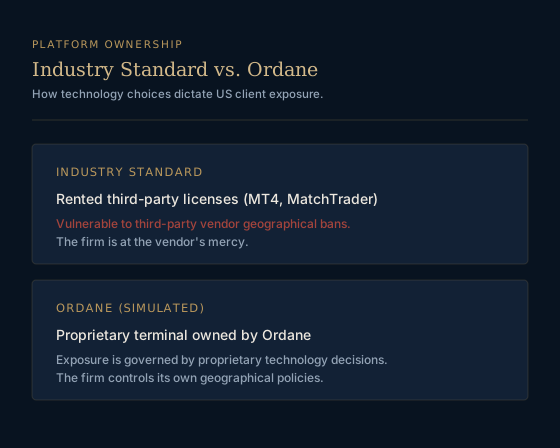
Companies licensing these platforms had to choose between maintaining global software access and continuing to accept clients in the United States. Most firms chose to protect their infrastructure. The restriction was a compliance enforcement by the software provider regarding how their technology was deployed. Because most companies did not own their technology, they had no leverage. When the platform vendor dictated new terms, firms complied immediately, causing sudden service interruptions for American users.
This vulnerability highlighted the difference between firms that build their own technology and those that rent it. A company licensing its terminal can be shut out of a geographical region overnight by a decision it does not control.
Do Major Prop Firms Still Accept US Traders?
Many established companies have formally paused or stopped accepting new traders from the United States.
FTMO (prop firm) officially suspended the onboarding of new traders residing in the United States (FTMO, retrieved 2026-09-26). Dozens of other companies updated their terms within days, adding the United States to their restricted lists.
| Metric/Feature | Ordane (Simulated) | Industry Standard |
|---|---|---|
| Platform Ownership | Proprietary terminal owned by Ordane | Third-party rented licenses (MT4, MatchTrader) |
| Onboarding Speed | Direct access without evaluation | Multi-step challenge phases |
| US Client Exposure | Governed by proprietary technology decisions | Vulnerable to third-party vendor geographical bans |
Historical reputation is no longer a reliable indicator of current accessibility. You cannot rely on outdated reviews to determine if a company accepts your application. The only source of truth is the current version of the firm's legal documentation.
How Can You Verify US Eligibility Before Paying?
You must check the firm's current terms and conditions for restricted jurisdictions before purchasing an evaluation.
The worst outcome is paying a fee and discovering at the payout stage that your country is restricted. Conduct a manual verification of the firm's documentation. Do not trust the marketing page, as these are often updated weeks after legal terms change.
First, locate the official rulebook. Search the document specifically for the words "restricted" or "jurisdictions". Most companies maintain a closed list of countries they will not service. If the United States is on that list, do not register.
Second, verify the policy on residency versus citizenship. Restrictions typically target physical residency. If you are a US citizen residing abroad, you must confirm eligibility directly with the firm's compliance team in writing.
Third, check the date on the rulebook. A document last updated in late 2023 will not reflect the changes that swept the industry in early 2024. A reliable company publishes a versioned rulebook so you know exactly which terms apply to your account at the moment of purchase.
What Is the Shift Toward Verifiable Rules?
Traders are demanding clear terms, transparent rulebooks, and verifiable mechanisms over marketing promises.
The events of 2024 proved that subjective rules and rented technology create systemic risk. You must examine the structural guarantees the company provides. The market is moving toward models that offer clarity from day one.
Ordane sells one product, the Ordane Instant Account: direct access, no evaluation phase and no challenge, on simulated capital. This approach removes the ambiguity of multi-step evaluations. Clear rules are only effective if backed by a verifiable mechanism holding the firm accountable.
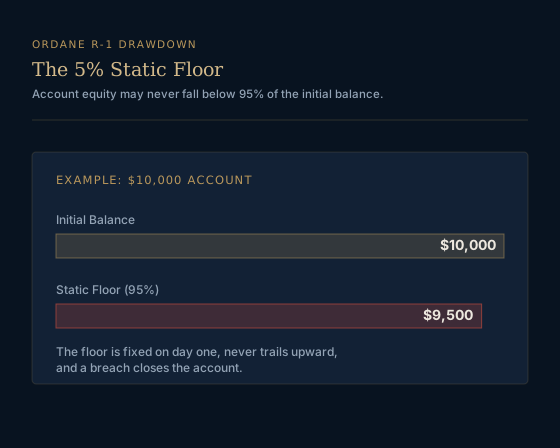
Ordane's maximum drawdown is 5 percent and static: account equity may never fall below 95 percent of the initial balance. For a $10,000 account, the floor is fixed at $9,500 on day one, never trails upward, and a breach closes the account.
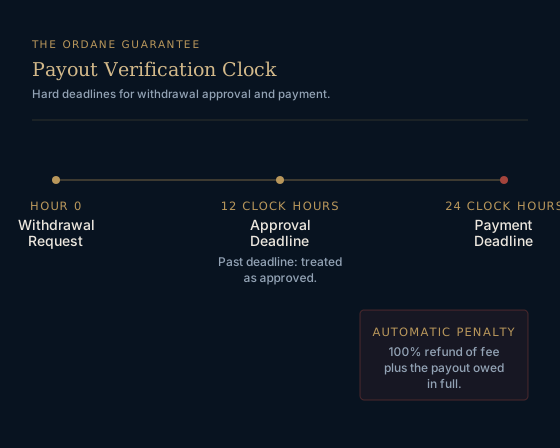
This accountability is formalized through The Ordane Guarantee. Every withdrawal request is approved, or denied in writing citing the exact rule breached by section number, within 12 clock hours. Past that deadline the request is treated as approved and the G-1 clock starts.
A payout approved and not paid within 24 clock hours, not business hours, triggers automatic compensation: a 100 percent refund of the account fee, plus the payout owed in full.
The Ordane Guarantee has two objective exclusions: documented fraud or KYC review, and declared force majeure. Both carry a hard deadline, and beyond it G-1 applies regardless.
| Scenario | Rule Breach Consequence | Firm Transparency Mechanism |
|---|---|---|
| Rented vendor bans US clients | Account termination with potential refund | None, firm is at vendor mercy |
| Payout delayed beyond 24 hours | 100 percent refund plus full payout | The Ordane Guarantee (G-1) |
| Rulebook change after purchase | Account governed by original version | Numbered and versioned rulebook |
FAQ: US Prop Firm Restrictions
Here are the definitive answers to common questions regarding prop firm restrictions for traders in the United States.
Are forex prop firms legal for US traders?
Firms do not act as brokers and do not hold client funds for live trading, as the accounts operate on simulated capital. Current restrictions are driven by technology vendors enforcing compliance policies on the firms licensing their software, rather than a direct law prohibiting individuals from participating in simulated environments.
Did FTMO suspend US traders?
Yes. FTMO officially suspended the onboarding of new traders residing in the United States (FTMO, retrieved 2026-09-26).
Can I use a VPN for a prop firm in the US?
Using a Virtual Private Network to bypass country restrictions violates almost every firm's terms of service. During the Know Your Customer verification process at your first payout, your true residency is revealed by your identity documents. If you used a VPN to circumvent a restriction, your account will be closed and the payout denied.
What happens if my prop firm stops servicing the US?
If a firm updates its restricted countries list to include the US after you purchased an account, the outcome depends on their terms. Some firms allow existing clients to continue trading, while others terminate active accounts and issue a pro-rata refund. Read the firm's communications closely to understand how your active account is affected.
Sources
- FTMO ftmo.com Retrieved 2026-09-26T00:53:35Z.